
For decades, the standard fitness advice for older adults was built around a singular, cautious theme: take it easy. The mental image of senior fitness was dominated by water aerobics, gentle stretching, and two-pound pink dumbbells. The underlying assumption was that the aging body is inherently fragile and must be protected from physical stress at all costs.
However, a massive paradigm shift is currently underway in the fields of gerontology, biomechanics, and rehabilitative medicine. Researchers and clinicians are completely rewriting the guidelines for healthy aging. The new prescription? Heavy lifting.
It sounds incredibly counterintuitive, and for many older adults, the idea of picking up a heavy barbell is terrifying. But the science is clear: inactivity and under-loading—not intensity—are the true drivers of age-related physical decline. Here is a look at the physiological realities of aging, and why moving heavy weight is becoming the ultimate anti-aging intervention.
The Silent Threat: Sarcopenia
To understand why light stretching is no longer the gold standard, we have to look at what happens to the human body as it ages.
Starting in our 30s and accelerating dramatically after age 60, the body undergoes a process called sarcopenia—the natural, age-related loss of skeletal muscle mass and strength. Estimates suggest that without intervention, the average adult can lose up to one-third of their muscle mass over their lifetime.
When you lose muscle, you do not just lose physical size; you lose your metabolic engine, your joint stability, and your physical independence. Walking up the stairs becomes exhausting, and getting out of a low chair becomes a monumental effort.
Light activities like walking, gardening, or using light resistance bands are excellent for cardiovascular health and mental well-being, but they do not provide enough mechanical tension to halt sarcopenia. To convince the body to hold onto muscle tissue, you must force it to adapt to a heavy load. You have to give the muscles a biological reason to stay strong.
Wolff’s Law and the Physics of Bone
Muscle loss is only half of the equation; the other half is bone density. As hormones shift later in life—particularly the drop in estrogen for women after menopause—bones begin to lose their mineral density, becoming porous and fragile (osteoporosis).
This is where the physics of heavy lifting becomes critical, governed by a medical principle known as Wolff’s Law.
Discovered in the 19th century by German anatomist Julius Wolff, this law states that bones will adapt to the structural stress placed upon them. If you place a heavy load on a bone, the physical stress signals the osteoblasts (bone-building cells) to lay down new bone matrix, making the bone thicker and denser. Conversely, if you remove stress from the bone, the body will reabsorb the minerals, and the bone will weaken.
Activities like swimming or cycling are fantastic for your heart, but because they are non-weight-bearing, they do absolutely nothing to build bone density. To trigger Wolff’s law, you need gravity, impact, and mechanical resistance. Lifting heavy weights physically pulls the tendons against the bone, creating the exact type of structural stress required to trigger new bone formation and prevent catastrophic fractures.
The Neuromuscular Connection and Fall Prevention
When most people think of heavy lifting, they think of bodybuilders trying to look a certain way. But in geriatric medicine, heavy lifting is about training the nervous system.
As we age, we specifically lose our “fast-twitch” muscle fibers—the fibers responsible for generating quick, explosive power. You don’t need fast-twitch fibers to take a leisurely walk, but you do need them to quickly shoot your foot out and catch your balance when you trip over a rug.
When an older adult engages in high-intensity resistance training (lifting a weight that is challenging to move for 3 to 5 repetitions), they are training their central nervous system to recruit muscle fibers quickly and forcefully. This improved neuromuscular coordination drastically reduces reaction times, which is the ultimate defense against falls.
The Barbel Fear Overcoming
The fear of lifting heavy is incredibly valid. Nobody wants to blow out a disc in their back or tear a rotator cuff. However, a very “heavy” is a relative term.
Heavy lifting for an 80-year-old does not mean stepping onto a platform and trying to break a powerlifting record. It means lifting a weight that is challenging for them. For a beginner, a heavy deadlift might simply be picking up a 15-pound kettlebell from the floor with perfect posture.
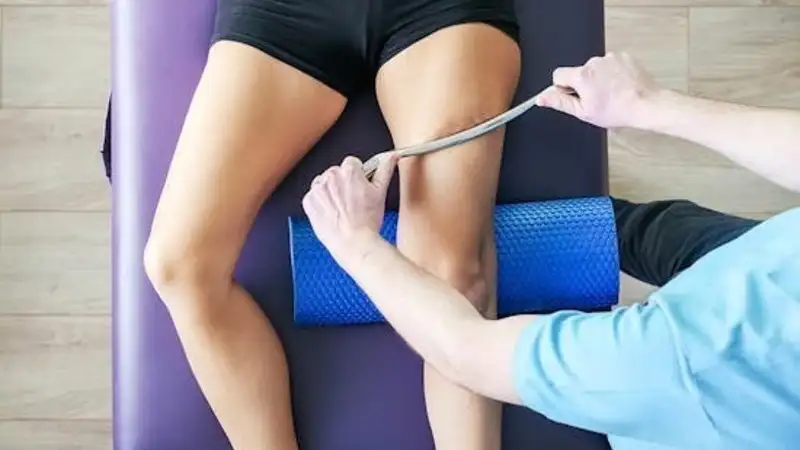
The key to this paradigm shift is clinical supervision. Whether you are consulting a specialist in physical therapy Fort Wayne IN or working with a strength coach in your local community, the process should be highly individualized. Medical professionals use scaled resistance, prioritizing perfect form and progressive overload (slowly adding weight over time) to ensure that the joints are protected while the muscles and bones do the work.
- Focus on Compound Movements: Exercises like squats (sitting to a box and standing up), deadlifts (picking a weight off the floor), and presses (pushing a weight overhead) offer the highest return on investment because they mimic real-world movements.
- Quality Over Quantity: The goal is not to perform 50 exhausting repetitions. The goal is 3 to 5 highly controlled, challenging repetitions that safely stress the system, followed by ample rest.
The Final Takeaway
The long-held belief that aging equals inherent fragility is a myth. The human body is incredibly resilient, and it will adapt to the demands you place upon it at almost any age. By trading the two-pound dumbbells for challenging, supervised resistance training, older adults are not just adding years to their lives; they are actively rebuilding the strength, armor, and confidence required to live those years on their own terms.